
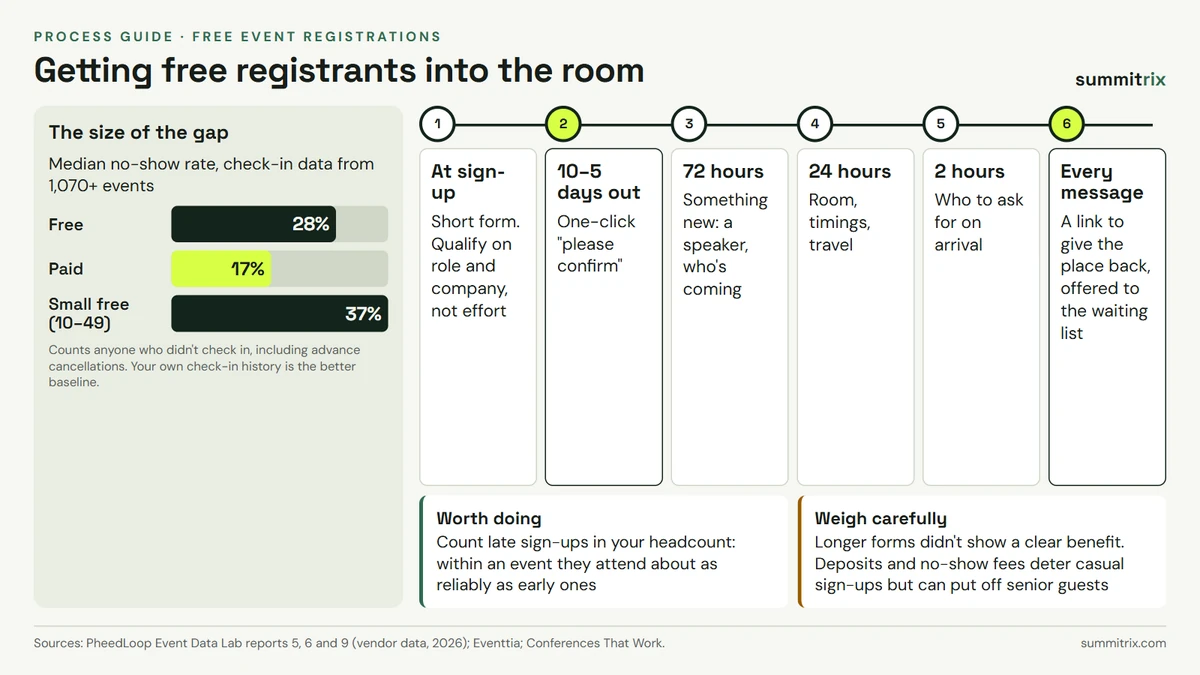
How big the gap usually is
PheedLoop looked at check-in data from more than 1,070 live events. The median no-show rate was about 28% for free events and about 17% for paid ones (PheedLoop report 5). Small free events of 10 to 49 people came out at around 37%. Bear in mind that the report counts anyone who didn't check in, including people who cancelled in advance.
You'll see much higher figures quoted online, such as "40% of free registrants don't show". We couldn't trace those to a primary source, so we don't use them. Your own past check-in data is a better baseline than any of them.
Making sign-up harder probably won't fix it
It's tempting to add friction: longer forms, approval steps, extra questions. A second PheedLoop study found the data wasn't enough to say that friction improves attendance. Whether the event charges mattered far more than how easy the form was (PheedLoop report 6).
So keep the form short. Qualify people on role and company, because that protects the room. Don't use the form as a filter for commitment.
Ask people to reconfirm, and give them a reason
A reminder works when it tells people something new. One event software company suggests a schedule of 7 days, 72 hours, 24 hours and 2 hours before the start, plus a one-click "please confirm" step five to ten days out (Eventtia). Treat that as a starting point. What matters more is the content:
- a confirmed speaker, or the kinds of companies attending
- practical details such as the room, timings and who to ask for
- a one-click link to give the place back, so it can go to someone on the waiting list
What about deposits and late sign-ups?
Some organisers ask for a deposit and hand it back at check-in. Others have thought about taking card details and charging people who don't come. Adrian Segar, who writes about conference design, points out the catch: it may put off casual sign-ups, but it can annoy the people who were always going to come, and someone has to run it (Conferences That Work). With senior invited guests, it's hard to see it going down well.
Late registrations deserve more credit than they get. Across PheedLoop's events, people who signed up in the final week missed more often. Within any single event, though, the gap almost disappeared, and the report advises against discounting late sign-ups in your headcount (PheedLoop report 9).
Sources and further reading
- PheedLoop Event Data Lab report 5: one in five registered attendees won't show up
- PheedLoop Event Data Lab report 6: does easier registration lead to more no-shows?
- PheedLoop Event Data Lab report 9: late registrants aren't flakier
- Eventtia: how to prevent no-shows at your events
- Conferences That Work: reducing no-shows at free events
Sources checked 29 October 2026. Guidance can change. This article combines cited source information with Summitrix’s proposed working approach.